Billing Types
Purpose
Billing Types define how recurring services are represented commercially and operationally within a sales contract in Professional Services. They provide the frame for calculation, duration, billing rhythm, and the detailed billing-type assignments from which recurring services are later invoiced.
Prerequisites
- a suitable sales contract exists or is prepared from a business perspective
- number series and, if needed, billing-type templates are configured
- the type, calculation logic, billing rhythm, and project reference are aligned
Functional focus
Billing types and templates
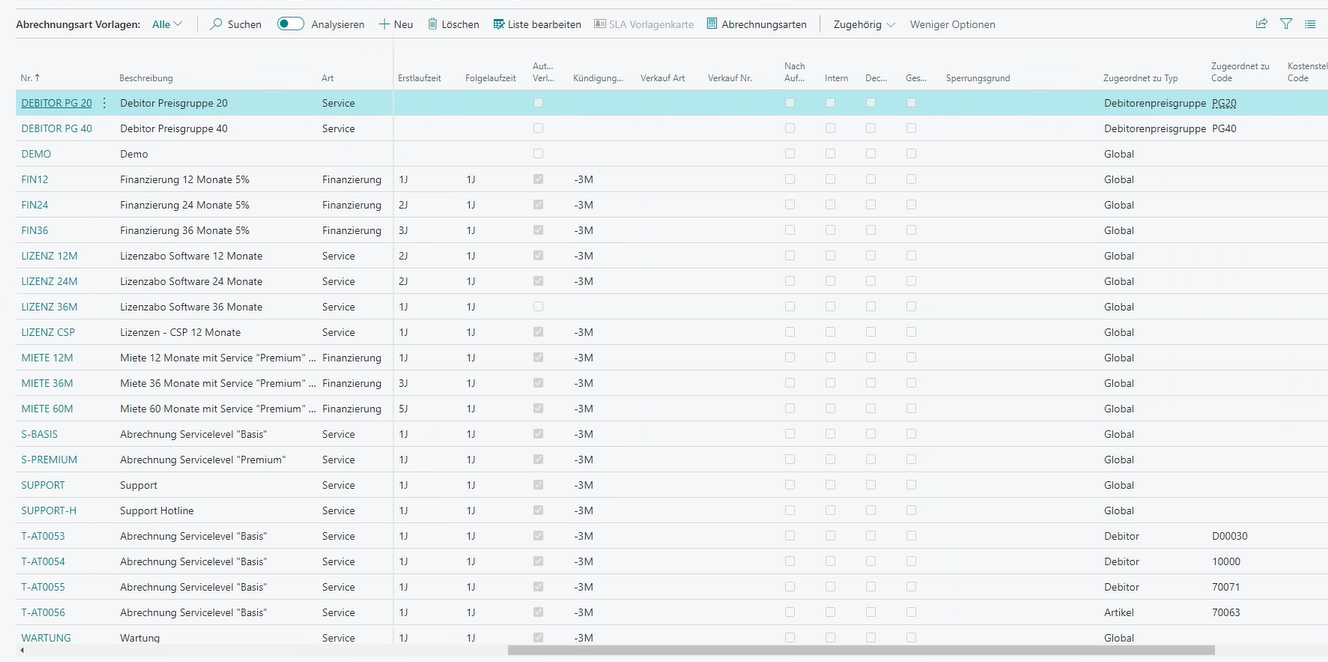
Billing types can be created manually or derived from templates. Templates help prepare recurring contract models such as financing, service, rental, or maintenance consistently and assign them to multiple contracts under the same rules.
Billing-type assignments and service scope
The actual contract service is specified in the billing-type assignments. These assignments define what can be billed, in which period, and on which basis. One sales contract can contain multiple billing types, each with multiple related assignments.
Billing, rhythm, and calculation
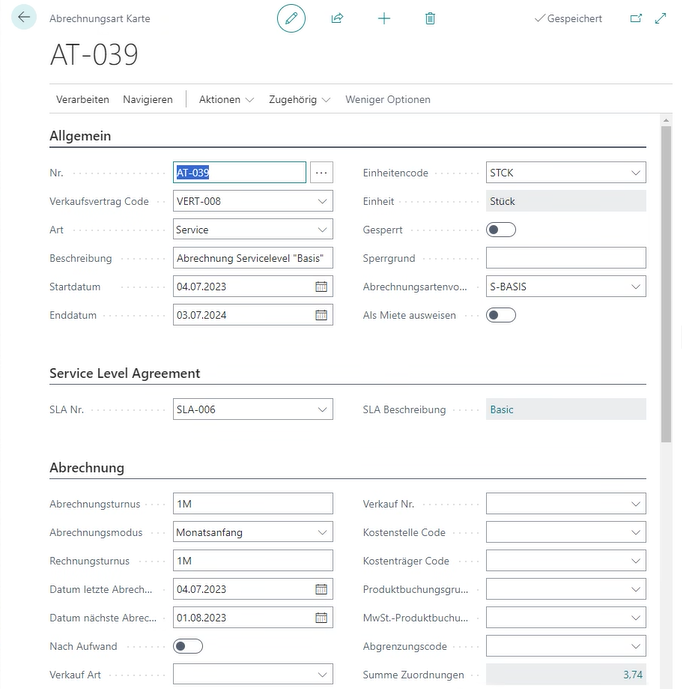
The billing type stores the cycle, mode, next billing date, item or service reference, dimensions, and posting groups. In addition, calculation basis, fixed price, percentages, and discounts control how recurring invoicing is determined later.
Connection to SLA, project, and duration
Billing types can be combined with SLAs, project and task references, and their own duration rules. This means billing is not handled in isolation, but as part of one shared model together with service commitments, contract logic, and project reference.
Outcome
Billing types translate recurring contract services into a robust billing model. They connect the sales contract, service scope, calculation, and invoicing so recurring services can be prepared and billed consistently.
Links